
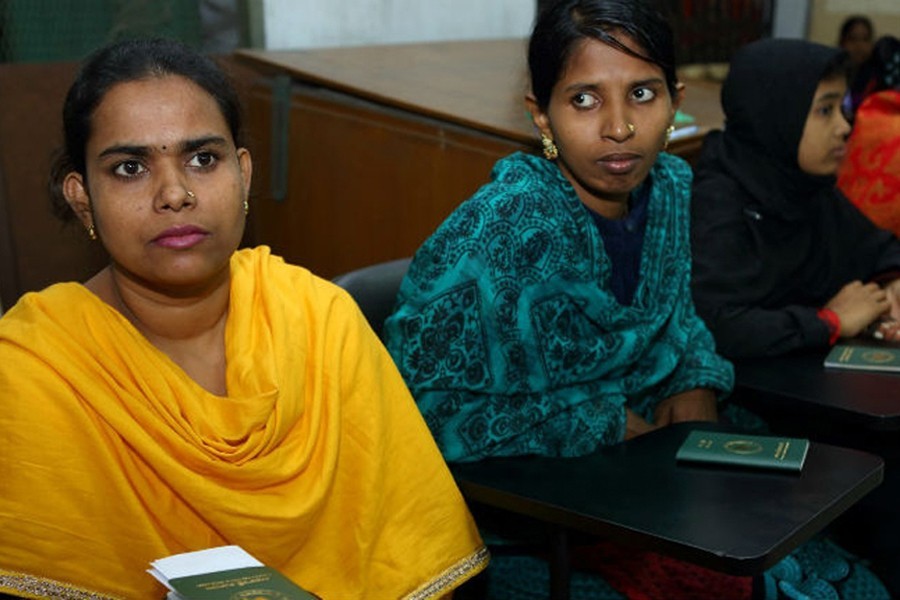
About 98 per cent of internal women migrant workers are struggling to procure sufficient food, as they have lost jobs because of the coronavirus pandemic, according to a study, conducted by BNSK.
It said many of the elderly female workers were even found sleeping around midday. At query, they responded that waking up from sleep and movement would increase their hunger. So, to avoid appetite of meals they were trying to sleep.
The study - 'Covid-19 Pandemic: Socioeconomic Situation of Migrant Women Workers' - was conducted during the March-April period this year by Bangladesh Nari Sramik Kendra (BNSK).
It covered 154 families in Chollish Bosti, Pora Bosti, Geneva Camp, Bizlee Mahlla and Johuri Mahalla of Mohammadpur in the capital.
The families migrated from Barisal, Satkhira, Khulna, Jamalpur, Mymensingh, Nilphamari, Kurigram, Rangpur, Gopalganj and Sylhet.
The findings showed that about 96 per cent of the surveyed women migrated from their place of origin to urban areas to alleviate economic hardship.
Majority of the women, 88 per cent, worked in informal sectors as domestic help, street vendor, and cleaner etc. The rest 12 per cent is garment workers.
Shima Aktar, a respondent who hailed from Barisal and is now staying with her parents at Bizlee Mahlla, said she has no savings to maintain food-related expenditures.
Shima, also a single mother, said she cannot earn because of lockdown.
"I am struggling hard to survive with my family. But I can't guess when this bad time will come to an end," she added.
The BNSK study identified that nearly 67 per cent of the migrant women were the main breadwinner of their family, while 33 per cent of them contributed partially. Both these groups have lost or been suspended from their livelihood opportunities at this moment.
Cent per cent of the respondents reported that they have no savings to procure daily food. All the workers said they have no option to pay their room/house rent for March and April due to losing job.
Respondents from domestic worker cluster said their employers would not allow them to enter into houses or land on house premises until the coronavirus pandemic is over from the country. Street vendors, cleaners and tailors also have no chance to start their work shortly.
Some 95 per cent of the surveyed female said their partners worked in informal sectors, and they also lost jobs due to the pandemic.
The findings showed that almost 92 per cent of the workers did not get dues from their employers because of the sudden shutdown, imposed by the government.
Some 86 per cent of the respondents said they did not get any support from the government service delivery agencies, while 10 per cent reported getting insufficient food supply from local commissioners.
One of the respondents said, "I was given only two kg of rice during the last 30 days of lockdown period."
The surveyed female workers also raised the need of emergency cooked meal support for the lockdown days.
The study also found that about 40 per cent of the elderly women are not getting regular health facilities.
arafat_ara@hotmail.com